

Controlled document
Page 1 of 5
We help organisations establish traceable, structured and scalable engineering processes across requirements, architecture, interfaces, integration and verification.
Practice overview
Good systems engineering makes every later phase cheaper. We help teams capture requirements, shape architecture, define interfaces and plan integration and verification, so intent stays visible from the first specification to the final test.
Process coverage
Intent stays visible from the first specification to the final test. Pick a discipline or let the wheel turn.
Step
Requirements
Needs from stakeholders are captured, refined and made testable each requirement with an owner, a status and a reason to exist.
Produces: Requirement specifications
Select any item. The thread lights up in both directions what it comes from, and what it affects.
Stakeholder need
Requirement
Design element
Test
Impact analysis · REQ-18 · Response under 20 ms
Affects 1 design element and 2 tests; traces back to 1 upstream item.
Scroll through the four phases and watch a system take shape needs, structure, interfaces, then proof.
Stakeholder needs are captured and refined into clear, testable system and software requirements.
Functional and physical architecture, allocation to hardware and software, and a view of how variants will be handled.
Signals, protocols and ownership between components are specified, so teams can work in parallel without ambiguity.
Integration order and verification strategy are planned alongside the design, with traceability maintained throughout.
Five controlled documents, bound together. Pick a tab or turn the page.
Controlled document
Page 1 of 5
Standards & tooling
4 groupsFrameworks
Modelling
Requirements
Assurance
Each outcome, drawn the way a systems engineer would explain it.
Outcome
One
shared baseline
One structured baseline replaces scattered documents and assumptions.
Outcome
Visible
impact, before the change
Traceability shows what a change touches before it is made.
Outcome
Fewer
surprises at integration
Interfaces and test strategy are agreed before teams diverge.
Built for
Automotive programmes
Industrial products
Connected devices
Safety-relevant systems
Five ways to engage on systems engineering pick the one that fits your roadmap.
Training and talent enablement · what you get Custom learning programs and deployment-ready talent
Discuss this modelHow we start
Step
Talk
A short call to understand your product, your constraints and what is already in place.
Step
Review
We read your requirements and architecture and report what is solid and what is not.
Step
Plan
A scoped plan: what we will do, in what order, and how progress will be shown.
Step
Start
The team joins your tools and cadence, and the first baseline is built.
Three things teams want to know before they start answered the way an engineer would answer.
Systems engineer
online · replies in seconds
Can you help us set up a process, not only do the work?
Seven more specialist practices, each with its own approach and deliverables.
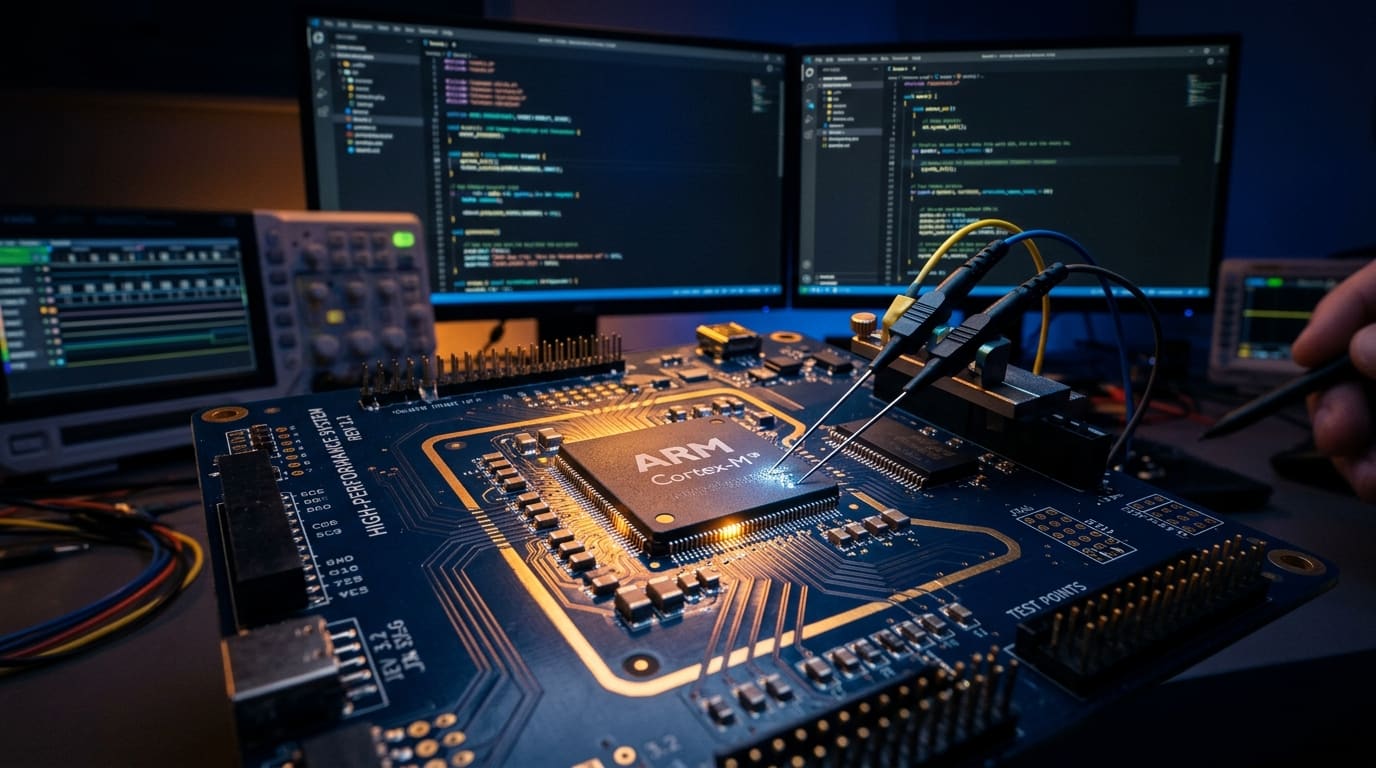
Robust embedded software for devices that demand performance, reliability and predictable behaviour.
Explore practiceSoftware engineering for ECUs, connected vehicles, electric mobility platforms and automotive electronic systems.
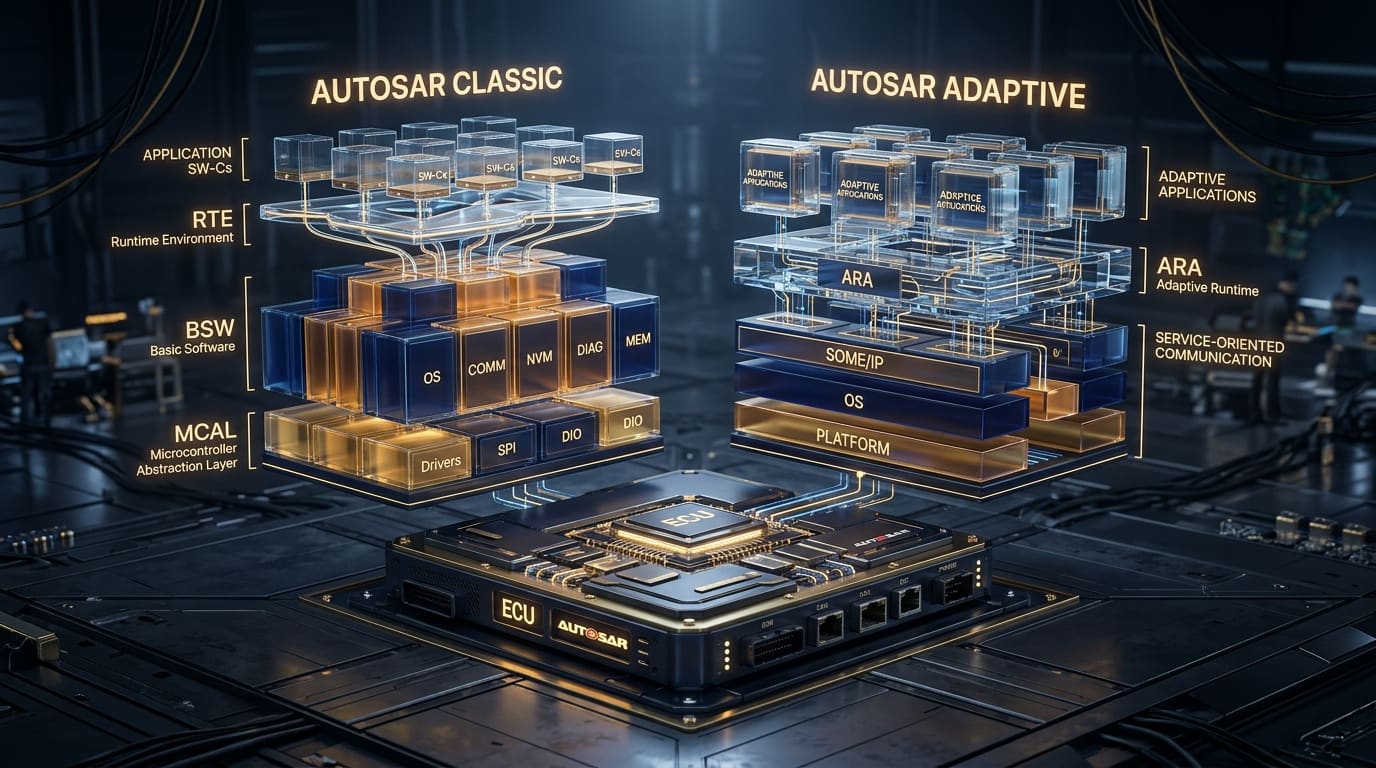
Explore practiceAUTOSAR Classic and Adaptive engineering for scalable, standardised, production-ready ECU software.
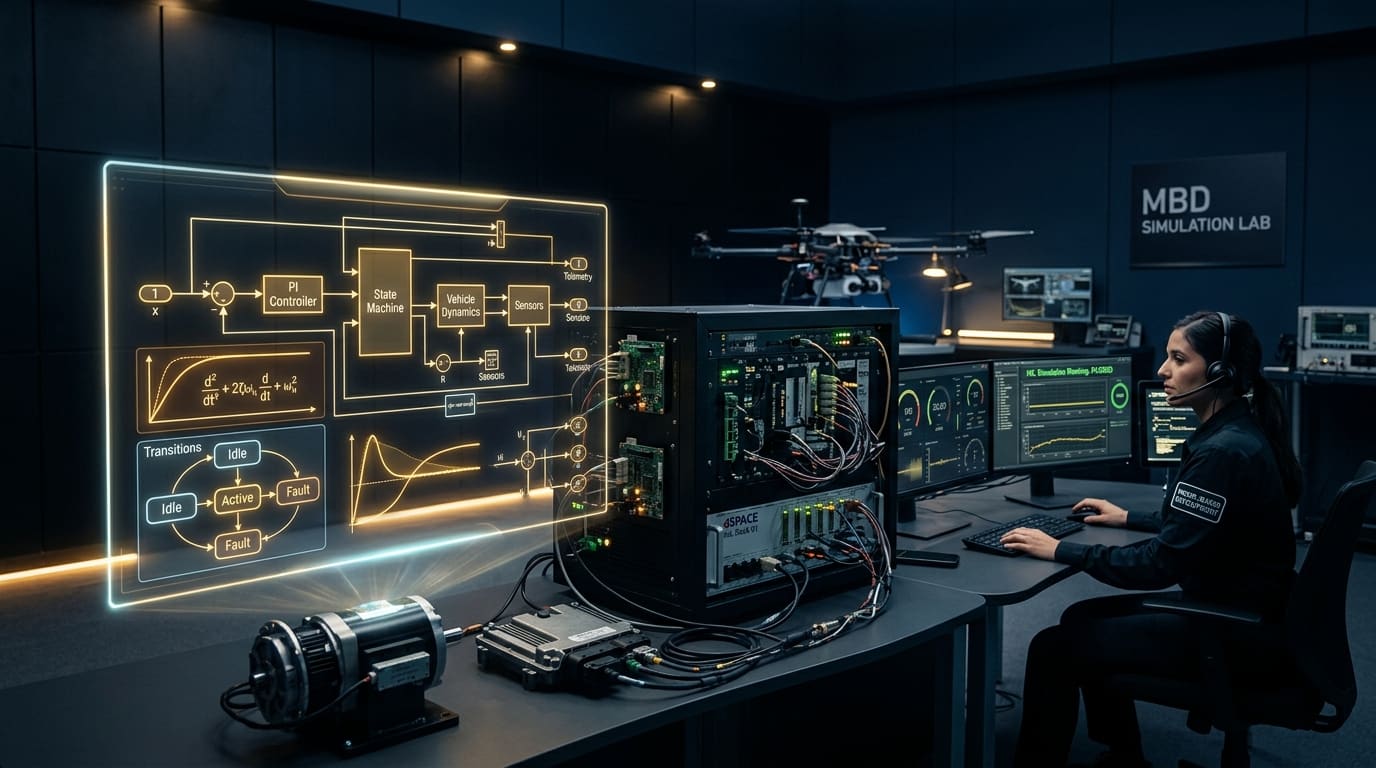
Explore practiceImprove control-system design, simulation, testing and software implementation through models.
Explore practiceSafety analysis, requirements, concepts and verification for safety-relevant systems.
Explore practiceSoftware verification, ECU testing, system validation and test automation services.
Explore practiceStrengthen the security of connected embedded products from design through validation.
Explore practice
Whether it is embedded software, AUTOSAR, ECU engineering or a full device-to-cloud product our teams will help you identify the right solution path.
I'm building…
Requirements & architecture
Systems Engineering
Firmware, drivers & middleware
Embedded Software
Diagnostics & communication stacks
Automotive Software
ECU testing & validation
V&V and Test Automation
Suggested engagement
Project-based delivery